

“What you resist, persists.”
This phrase is attributed to Carl Jung and, while this may not be his exact wording, it definitely is a concept that is foundational to those of us who work as psychologists like me and other mental health professionals.
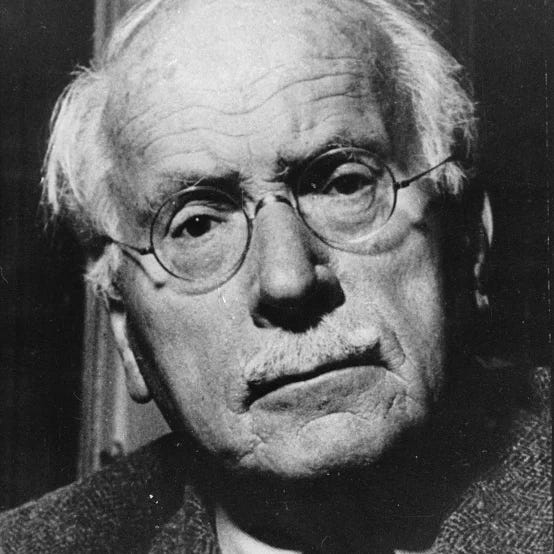
Sometimes he’s credited with saying it this way: “What you resist not only persists, but will grow in size. ”
The shorthand distillation of this concept is this:
Repressed contents of the psyche gain autonomy
Unconscious material strengthens when it is denied or fought
Psychological symptoms worsen when the ego refuses integration
I often talk with clients about my firm conviction that we can either deal with our stuff/Scheiße/shit DIRECTLY or INDIRECTLY. Those are the only two choices. And the option of dealing indirectly has consequences….emotional, psychological and physical consequences. You just can’t pretend stuff doesn’t exist and make it go away. Let’s say you break your leg but you don’t want a broken leg so you don’t let yourself know that you did indeed break your leg and you don’t get any medical care. Sorry, your leg is still broken.
It’s all gonna find expression, one way or another.
WHEN WE RESIST, WE KEEP THE DANG THING MORE ALIVE!
Drum roll please……….

Welcome to the stage THE PINK ELEPHANT!

I’m not talking about what you might be seeing when, you know. It’s a reference to the “pink elephant effect” AKA the ironic process theory.
Simply stated, when we try not to think about X → our mind immediately thinks about X.
This is such an important concept for our overall health for several reasons:
1. Resistance keeps the thing mentally alive
When you try to suppress a thought, feeling, or impulse, part of your mind has to keep checking whether it’s still there.
That monitoring process re-activates the very thing you’re trying to avoid.
So:
“Don’t feel anxious”
“Don’t think about death” (!!!!!!!!!!!)
“Don’t want that thing”
what this leads to is = constant internal surveillance → persistence.
2. The unconscious fights back
The unconscious doesn’t like being ignored.
What you repress:
does NOT disappear
gains energy
returns sideways (dreams, slips, symptoms, obsessions)
The pink elephant is the surface version.
The Jungian version is the elephant moving into the basement and knocking on pipes at night.
3. Suppression vs. integration
Pink elephant effect → stop trying to suppress; allow the thought to pass
Jung → bring the content into consciousness and relate to it
Not indulge, not act out—but acknowledge.
“Yes, you’re here. I see you.”
(And paradoxically, it loosens.)
4. Why this matters emotionally
forced positivity backfires
“be strong” prolongs grief
obsession feeds on avoidance
shame keeps habits alive
Resistance adds fuel. Attention with curiosity removes it.
I hinted above ⬆️ about how this concept has taken on even more meaning for me. My forthcoming book (You’re Going to Die But Not Me, Spring, 2026 Pierian Springs Press) is in one sense about my journey of FIRST trying to keep that particular wolf at bay ALL THE WAY to spending hours every day steeped in ALL THINGS DEATH. 😱
Ernest Becker is quite blunt about this in his book, The Denial Of Death,
“If you don’t consciously come to terms with death, you’ll spend your life constructing defenses against it—and mistake those defenses for who you are.”
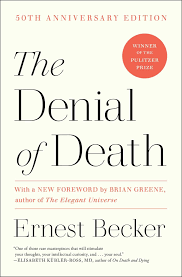
To be pithy about it, you don’t escape death by not thinking about it—you just let it run the show from backstage.
And that’s because:
1. Death anxiety leaks into everything else
When death isn’t faced consciously, it tends to show up sideways: chronic anxiety, perfectionism, control issues, or an obsession with productivity and “making something of yourself.” You’re still reacting to mortality—you’re just not naming it.
2. You mistake busyness for meaning
Avoiding death often leads to filling time rather than inhabiting it. Life becomes about distraction, accumulation, optimization. You’re very occupied, but not necessarily alive.
3. You cling harder to the ego
If finitude isn’t acknowledged, the ego has to pretend it’s permanent. That can mean over-identifying with status, youth, success, or being “right.” Threats feel catastrophic because they are—to a self that secretly believes it must not end.
4. You struggle more with loss when it arrives
Grief hits harder when death has been treated as an abstraction or taboo. People who’ve never allowed death into thought or language often feel blindsided, even betrayed, when it finally enters their life.
5. You outsource meaning to systems
Religion, nationalism, work culture, wellness, hustle, legacy—any of these can quietly become a substitute immortality project. They’re not bad in themselves, but they can turn rigid when they’re carrying too much existential weight.
6. You may live more cautiously—but not more safely
Paradoxically, death denial doesn’t make people reckless; it often makes them timid. Less risk, less vulnerability, fewer deep loves—because attachment implies loss.
7. You miss a powerful clarifying tool
People who do think about death (not morbidly, but honestly) often report clearer values, deeper gratitude, and sharper moral focus. Death has a way of editing the bullshit.
Finally, because this is such a gorgeous novel I want to reference it again. Here is a passage toward the end of Charlotte Wood’s book, Stone Yard Devotional:
“Lying awake in the dark, I understand that this low vibration is telling me a dreadful truth: that I will die. This knowledge that remains mostly hidden from the self but is always there, gaining ground inside us, unstoppable.”

I’m doing really well on this, y’all….doing well on the awareness part, I mean. I get a gold star and an A+++++ cuz here’s what has been in front of my face practically 24/7 for the past two years:

MEMENTO MORI, GUYS!
Love and peace and also maybe some intrepidity,

PS: If you like this post, I’d be most grateful for a ♥️ and a SHARE/RE-STACK ⬇️